 ktravelinfo
The short answer: wait for guidance and ask about the conditions that matter
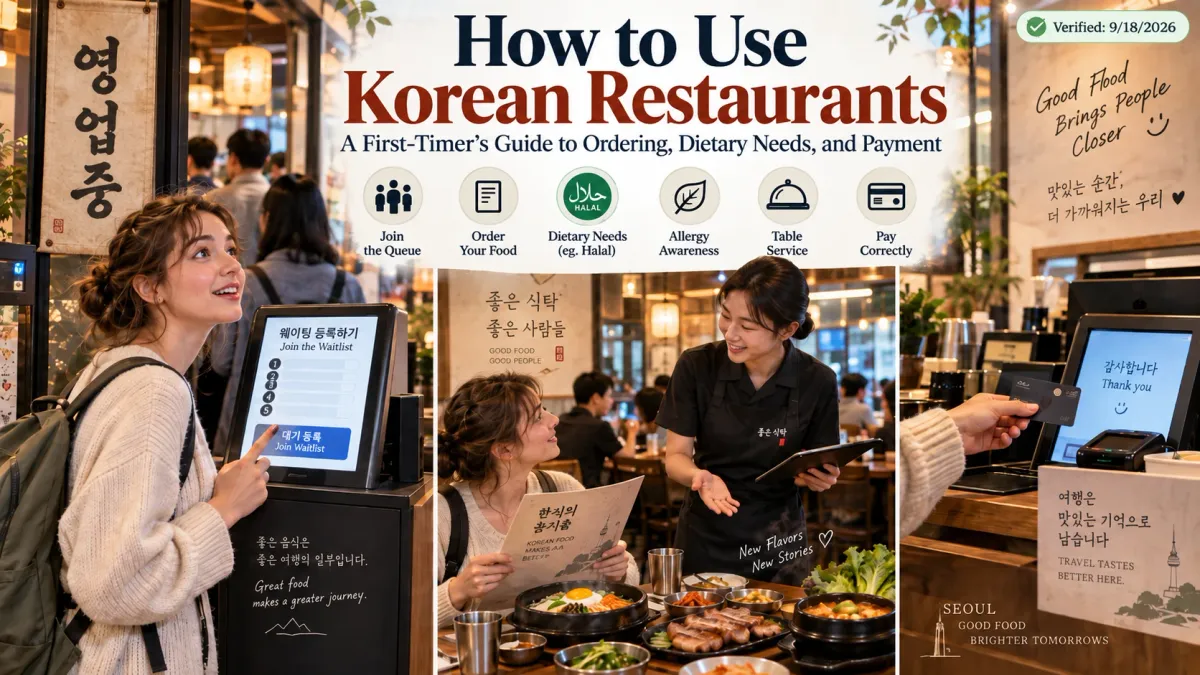
Korean restaurants do not all work the same way. Some seat you at the entrance, some require you to join a queue first, and others use self-service stations or call buttons. An unfamiliar system does not necessarily mean the staff are being rude or refusing service. Follow the signs and ask short, specific questions.
Check these four things first:
- Can you enter now, or do you need to join a queue or have a reservation?
- Is the listed price for one serving, and is there a minimum number of servings?
- Do the ingredients and cooking method meet your allergy or dietary requirements?
- Do you pay at the counter, table, or kiosk, and will your payment method work?
Before you go: check how the restaurant operates, not only its opening hours
Popular restaurants may use an in-person line, numbered tickets, a tablet, QR code, mobile waitlist, or timed reservations. Recheck recent notices or the official booking channel shortly before visiting.
- Check whether walk-ins, a waitlist, or reservations are available.
- Confirm whether solo dining is allowed and the minimum order.
- Read deposit, cancellation, and late-arrival rules.
- Check whether foreign-issued cards, cash, or mobile payment are accepted.
Some systems require a Korean phone number or domestic payment method; others offer services for international visitors. Do not assume either way. After registering, watch for your name, an app alert, or the queue-number screen. The Korea Tourism Organization (한국관광공사) guide to CATCHTABLE Global explains international reservations and on-site queues.
Entering and ordering: follow the seating system and check minimum orders
Even if you see an empty table, tell staff how many people are in your party and wait to be seated. Some places allow self-seating, while others assign tables around reservations and queue order. Being asked to wait may simply be part of that system.
Barbecue, hot pot, and some stew menus may show a per-serving price but require at least two servings. Solo travelers should ask about the minimum and whether one-person dining is possible. Photos and translation apps help with menu names, but they do not confirm ingredients, portion size, or cooking methods.
Dietary needs: halal, Muslim-friendly, and pork-free are not the same
Tell staff about allergies, vegetarian or vegan requirements, excluded meats, or religious dietary needs before ordering. “Halal,” “Muslim-friendly,” and “pork-free” do not promise the same thing. The Korea Tourism Organization separates halal-certified, self-certified, Muslim-friendly, and pork-free categories. State what matters to you—such as alcohol, pork, halal menu availability, or separate preparation—and consult its Muslim-friendly restaurant categories.
For allergies, ask about preparation as well as ingredients
For a severe food allergy, ask about stock, sauces, side dishes, shared utensils, and cooking oil. If staff cannot give a clear answer, choose an option you know is safe or avoid the dish. Food allergies can lead to life-threatening anaphylaxis, so explain the risk clearly before ordering. See the Korea Disease Control and Prevention Agency (질병관리청) guidance.
During the meal: observe first, then ask when you need something
Cutlery and napkins may be in a drawer beside or under the table. Water and side dishes may be served by staff or collected from a self-service station. Press the table call button if there is one; otherwise, it is fine to raise your hand. Refills, small plates, scissors, and tongs can work differently by restaurant, so check the signs and ask. The Korea Tourism Organization restaurant guide covers self-service, call buttons, and cutlery drawers.
Stews, hot pots, and barbecue may be shared from one pot or grill. Ask for a small plate or ladle if needed. At barbecue restaurants, staff may cook the meat for you, or diners may cook it themselves.
Staff not visiting the table frequently does not necessarily mean you are being ignored. In some restaurants, customers ask when they need something. If the wrong dish arrives or the quantity looks wrong, confirm it before eating or paying.
Payment: check where to pay and keep the receipt
Tipping is not generally expected at ordinary Korean restaurants. Water and basic side dishes are often provided without an extra charge, but check the menu and receipt for paid dishes, alcohol, extra orders, or service fees. The official restaurant guide also covers tipping, water, side dishes, and kiosks.
Many restaurants take payment at the counter, though table and kiosk payment also exist. Do not assume every terminal accepts a foreign-issued card. Ask which methods work; if a payment fails, ask about another terminal or paying at the counter. It is safer not to rely on only one card.
If something goes wrong: explain the specific mismatch
Ask about unfamiliar rules before treating them as a problem. If the food, price, quantity, or unexplained charge differs from what you ordered, request a correction before paying. Showing the menu, order screen, or receipt reduces misunderstandings.
2명이에요.— There are two of us.몇 인분부터 주문할 수 있어요?— What is the minimum number of servings?덜 맵게 가능해요?— Can you make it less spicy?이 음식에 ○○이 들어가나요?— Does this contain ___?알레르기가 있어요.— I have an allergy.앞접시 주세요.— Could I have a small plate?계산 어디에서 해요?— Where do I pay?주문한 메뉴와 달라요.— This is different from what I ordered.가격을 다시 확인하고 싶어요.— I would like to check the price again.
If speaking is difficult, show a menu photo, allergy card, or translation-app screen.
30-second checklist before you leave
- Check today’s opening, queue, and reservation situation.
- Confirm the minimum order and whether solo dining is possible.
- Prepare a short explanation of allergies, dietary needs, or spice level.
- Save the restaurant’s Korean name and address.
- Bring more than one payment option and check the quantity and total before paying.