 ktravelinfo
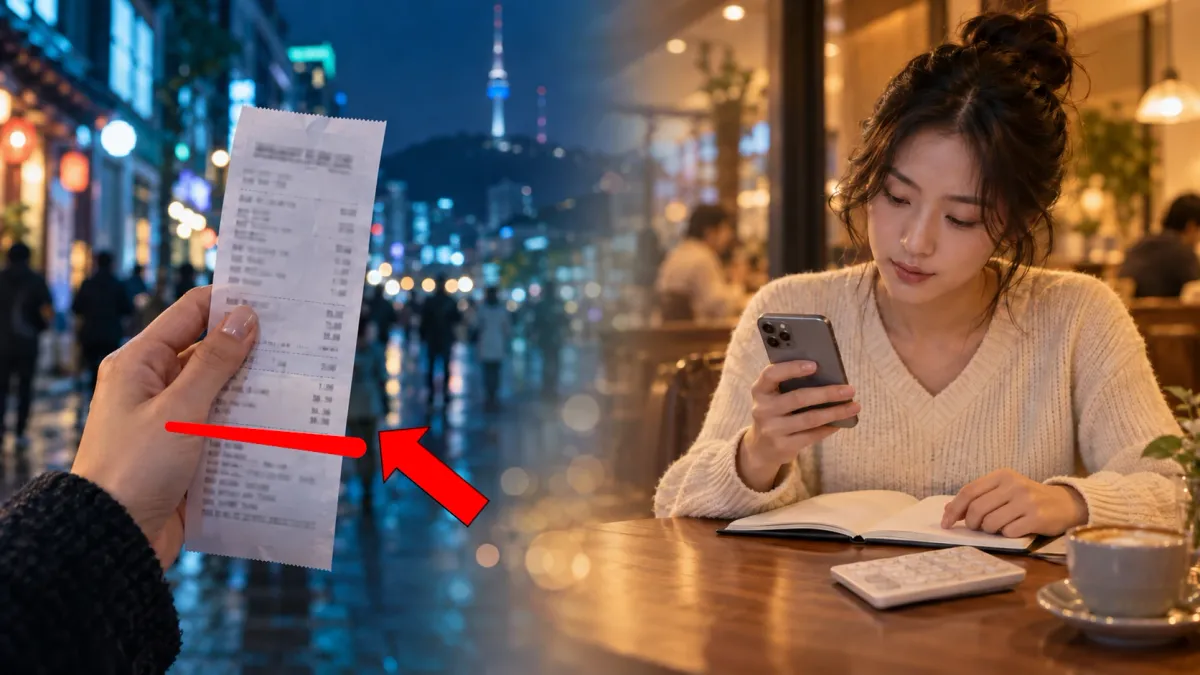
Prices are usually displayed clearly in South Korea, and card payment is widely available. Even so, your final bill can be higher than the first number you saw. A restaurant may have a minimum order, a taxi in Seoul (서울) may add late-night or out-of-city surcharges, and a seafood market may charge separately for the seafood and the restaurant that prepares it.
That does not automatically mean you were overcharged. The useful test is simple: were the price and conditions disclosed before payment, and does the final charge match what you agreed to?
Extra costs and warning signs at a glance
| Situation | A legitimate extra cost may be | Check again if |
|---|---|---|
| Taxi | Late-night or out-of-city surcharge, toll, approved flat or reservation fare | The driver asks for more than the meter or disclosed fare, or takes a major unexplained detour |
| Barbecue or hot-pot restaurant | Price per serving × minimum number of servings | The billed quantity or price differs from the menu |
| Seafood market | Seafood plus separate table, preparation, or cooking fees | Weight, unit price, or cooking fee is not explained |
| Shopping | Discount conditions or different tax-refund methods | Duplicate charge, wrong price, or refund terms change after payment |
| Street stall or festival | Higher location or event pricing | No price display, or the unit—piece, cup, plate, or weight—is unclear |
| Accommodation | Cancellation, extra guest, bedding, breakfast, or parking fees | The room or extra charge differs from the booking confirmation |
| Card or ATM | Foreign transaction and ATM fees | Home-currency conversion is applied without your choice |
1. Taking a taxi late at night or beyond Seoul
Standard Seoul taxis apply late-night surcharges from 10 p.m. to 4 a.m., and an out-of-city surcharge may apply after leaving Seoul. Tolls can also be charged separately. When late-night and out-of-city conditions overlap, the difference can be substantial. Check the current rates by vehicle and time on the Seoul Metropolitan Government (서울특별시) taxi page.
A late-night fare being higher than a daytime fare is not, by itself, evidence of overcharging. These situations deserve a closer look:
- A standard metered taxi does not run the meter and demands a cash flat fare.
- The driver asks for more than the fare shown in the app or vehicle.
- The route is much longer than expected without a traffic or routing explanation.
- The requested payment differs from the meter or payment screen.
- The driver refuses to provide a receipt.
Approved airport-zone, reservation, and branded taxi fares can be legitimate exceptions to ordinary meter pricing. Compare the request with the booking screen and fare notice before treating every flat fare as improper.
Useful phrases
미터기로 가 주세요.— Please use the meter.통행료와 할증이 포함된 금액인가요?— Does this include the toll and surcharge?영수증 주세요.— Please give me a receipt.
2. Mistaking a per-serving price for the total price
Korean barbecue, dakgalbi, hot-pot, and stew restaurants may display a price for one serving while requiring a first order of two or more servings. If one serving is ₩18,000 and the minimum is two, the food starts at ₩36,000 before rice, noodles, or drinks.
- 1인분: one serving or one person’s standard portion
- 2인 이상 주문: at least two servings of the same menu item
- 1인 1메뉴: each person at the table must order one menu item
- 100g당 가격: the final price depends on the actual weight
- 시가: market price; ask for today’s price before ordering
Many restaurants refill basic side dishes without charge, but not every side dish or additional item is free. Check before asking for more.
Useful phrases
이 가격은 1인분 가격인가요?— Is this the price for one serving?두 명이 먹으면 총 얼마인가요?— How much is it in total for two people?최소 주문이 몇 인분인가요?— What is the minimum number of servings?
3. Paying for seafood but forgetting the restaurant fees
At some Korean seafood markets, you buy seafood from a vendor and take it to a separate restaurant. You may then pay twice: once for the seafood, and again for table service, sashimi preparation, steaming, grilling, soup, or drinks.
Separate preparation fees can be legitimate. The concern is whether the seller disclosed the weight, unit price, total seafood price, and restaurant fees before you agreed. Ask for all four in writing. If something is described as “service,” confirm whether it is completely free or conditional on a purchase.
Useful phrases
이 해산물의 무게와 총가격을 적어 주세요.— Please write down the weight and total price.식당에서 추가로 내는 비용은 얼마인가요?— How much will I pay additionally at the restaurant?상차림비와 조리비가 포함되어 있나요?— Are the table and cooking charges included?
4. Treating the sale price or tax refund as the final price
Read the conditions beside the large discount number. Check whether it requires a minimum spend, membership, a specific payment method, or a multipack purchase. Also confirm whether the displayed price is before a tax refund or already reflects an immediate refund, and whether a free gift changes the return conditions.
Korea’s tourist tax refund is not automatic at every store or for every product. Participating stores, minimum purchase amounts, stay and export conditions, and the refund method all matter. Immediate, downtown, and airport refunds work differently. Check the latest details in the official Korea Tourism Organization tax refund guide.
If a cashier says your first card payment failed and asks you to pay again, check your banking app immediately. Two approval alerts may mean both payments went through; show both records and request a reversal while you are still there.
Useful phrases
할인과 세금환급을 적용한 최종 금액인가요?— Is this the final price after the discount and tax refund?카드가 두 번 결제되지 않았는지 확인해 주세요.— Please check that my card was not charged twice.환불 조건을 영수증에 표시해 주세요.— Please show the refund conditions on the receipt.
5. Not checking the pricing unit at a street stall or festival
Food at tourist areas and festivals may simply cost more than in an ordinary neighborhood. The important question is whether the price and sales unit were clear before ordering.
A sign showing ₩5,000 could mean one piece, one cup, one plate, or 100 g. Mixing flavors or changing size may also create a different order. If there is no clear price display, use a calculator screen to confirm the total before the food is prepared.
Useful phrases
이것 하나의 가격이 얼마인가요?— How much is one of these?추가 비용까지 포함해서 총 얼마인가요?— What is the total price including any extras?주문하기 전에 가격표를 보여 주세요.— Please show me the price before I order.
6. Comparing only the headline room rate
Accommodation costs often rise because travelers miss a booking condition. Two similar rooms may have different cancellation rules, occupancy limits, bedding or breakfast inclusions, and check-in requirements.
Save screenshots of the final price including taxes and fees; the free-cancellation deadline and time zone; no-show and same-day cancellation fees; standard and maximum occupancy; extra guest, bedding, breakfast, and parking fees; and late check-in rules.
If the property provides a different room or requests an unlisted fee, show the booking confirmation first. For a platform booking, record the issue with both the property and the platform, and photograph the room condition or fee notice.
Useful phrases
예약 확인서에는 모든 요금이 포함되어 있습니다.— My booking confirmation says all charges are included.이 추가 비용의 근거를 보여 주세요.— Please show me why this additional charge applies.결제하기 전에 예약 플랫폼에 확인하겠습니다.— I will check with the booking platform before paying.
7. Choosing your home currency at a card terminal or ATM
A Korean card terminal or ATM may offer Korean won (KRW) and your home currency. The home-currency amount can look convenient, but it may use Dynamic Currency Conversion (DCC), which can include the provider’s exchange rate and additional fees or markup.
According to Visa’s DCC guide, merchants and ATMs should show both currencies, the exchange rate, and additional fees, and let you accept or decline the conversion. Selecting KRW or Korean won keeps a won-priced transaction easier to evaluate, although the final cost still depends on your card issuer’s exchange rate and foreign transaction fees.
An ATM may separately charge a Korean operator fee, your bank’s withdrawal fee, and currency-conversion costs. Repeated small withdrawals can repeat fixed fees, so check the currency and fee screen before approving.
Useful phrases
원화로 결제해 주세요.— Please charge me in Korean won.자국 통화 변환은 원하지 않습니다.— I do not want dynamic currency conversion.
Expensive and improperly charged are not the same thing
If the price and conditions were clear before ordering and the final bill matches them, the product may simply be expensive. Keep evidence and request a correction when the displayed and charged prices differ, an unapproved item or quantity is added, a card is charged twice, a taxi requests more than the applicable meter or disclosed fare, stated refund terms are not honored, or a service is provided before its price is disclosed.
What to do when a charge looks wrong
1. Check the bill before leaving
Review the item, quantity, and unit price. Use a translation app or calculator to show the price you accepted beside the actual charge. Leave first and seek help if you feel unsafe.
2. Save evidence
- Price displays and menus
- Receipt and card approval records
- Booking confirmation and cancellation terms
- Taxi number, pickup and drop-off times, and route
- Messages with staff, the property, or booking platform
3. Contact 1330
The 1330 Korea Travel Helpline & Complaint Center provides travel information, interpretation, and complaint support by phone and real-time chat. Check the official page for current languages and channels. For an immediate threat, violence, or theft, call the police at 112 first.
4. Contact your card issuer when necessary
If a duplicate payment or unapproved currency conversion is not reversed, keep the receipts and conversation records and ask your card issuer about its dispute process. Explain precisely what you did not authorize; a high price and an unauthorized transaction are not the same issue.
Save this checklist before your trip
- Check the expected taxi route and app fare conditions.
- Ask whether a menu price is per serving and whether a minimum order applies.
- For food sold by weight, confirm both the unit price and total.
- At a seafood market, ask separately about seafood and restaurant fees.
- Confirm the final amount after discounts and tax refund.
- Compare the card alert with the receipt immediately.
- On a DCC screen, review the currency, exchange rate, and added fees before choosing.
- Keep price displays, booking terms, and receipts until the trip ends.
- Contact 1330 for travel help or 112 in an emergency.
The best way to avoid unexpected spending is not to distrust every seller. It is to confirm the quantity, extra fees, and final amount before paying. If the charge differs from the explanation, keep calm, save the evidence, and ask for help.